

You glance in the mirror after a late night or a long day at the screen, and the whites of your eyes are streaked with red. It can look alarming, but bloodshot eyes usually feel worse than they look and clear up on their own.
Bloodshot eyes happen when the tiny blood vessels across the white of your eye swell and become more visible, turning the surface pink or red. It’s a symptom rather than a condition in itself, and the list of possible triggers is long, with most of them harmless.
At EyeSelect, our optometrists see red eyes all the time, and the cause is usually something simple. In this blog you will learn what causes bloodshot eyes, how to get rid of them at home and when red eyes are worth getting checked.
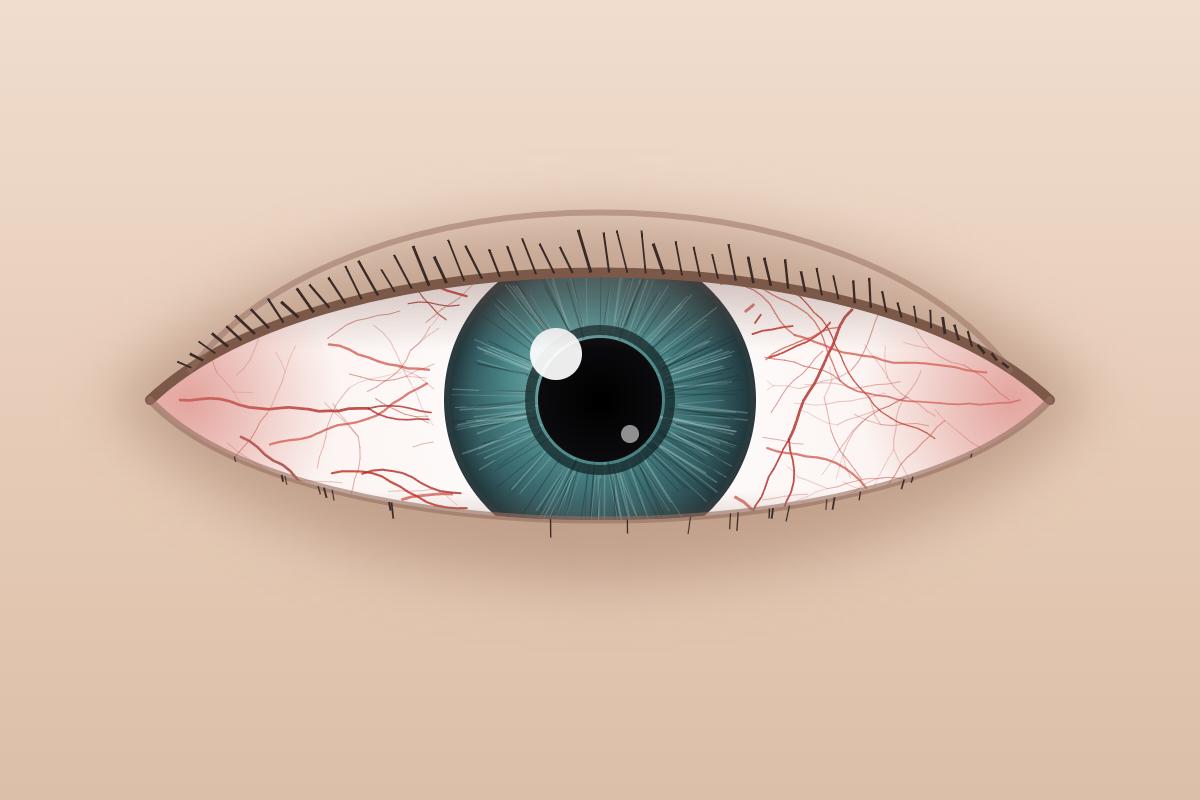
What Are Bloodshot Eyes?
The white of your eye, called the sclera, is covered by a thin clear membrane, the conjunctiva, that is packed with blood vessels so fine you normally cannot see them. When something irritates or inflames the surface, those vessels widen and fill with blood, which is what gives the eye its red, bloodshot look. The redness can sit in one small patch or cover the whole eye, and it can affect one eye or both.
A red eye often looks worse than it feels. Most cases are harmless and settle within a few days once the trigger is gone.
What Causes Bloodshot Eyes?
Red, bloodshot eyes have plenty of possible triggers, but a handful account for most cases. These are the ones optometrists see most often.
Tiredness, Screens and Eye Strain
A late night, broken sleep or hours staring at a screen all leave your eyes dry and overworked, which keeps those surface vessels dilated and red. This is why so many people wake up with bloodshot eyes or notice them creeping in by the end of a long work day. You tend to blink less when you are concentrating on a screen, which dries the eyes out further.
Dry Eyes
When your eyes do not make enough tears, or the tears evaporate too quickly, the surface gets irritated and the eye turns red. Dry eye often brings a gritty feeling in the eye, along with burning and a heavy, tired sensation. Screens, air conditioning, ageing and contact lenses all make it more likely. If your eyes are red and scratchy day after day, our guide to dry eye treatment walks through your options.
Allergies and Irritants
Allergens such as pollen, dust mites, pet dander and mould trigger the release of histamine, which leaves your eyes red, itchy and watery, often with sneezing and a runny nose. Physical irritants do the same: smoke, wind, dust, fumes and the chlorine in a swimming pool. Wearing contact lenses for too long, or sleeping in them, is another common culprit. Viral infections like a cold or the flu can redden the eyes as well.
Eye Infections
Conjunctivitis, better known as pink eye, makes the eyes red and itchy with a sticky or watery discharge, and it can be viral, bacterial or allergic. The viral and bacterial kinds spread easily, so good hand hygiene matters. Blepharitis, where the eyelid margins become inflamed, causes redness with crusty lashes and a gritty feeling. As a rule of thumb, if home remedies have not helped after about a week, an infection may be the reason.
A Broken Blood Vessel
Sometimes a single bright red patch appears on the white of one eye, which can be startling. This is a broken blood vessel, known medically as a subconjunctival haemorrhage, and it usually follows a coughing fit, a sneeze, heavy lifting, straining or rubbing your eye. It looks dramatic but is normally painless and harmless, and it clears on its own within about two weeks, much like a bruise fading. It is worth getting checked if it follows an injury, keeps coming back or comes with pain or any change in vision.
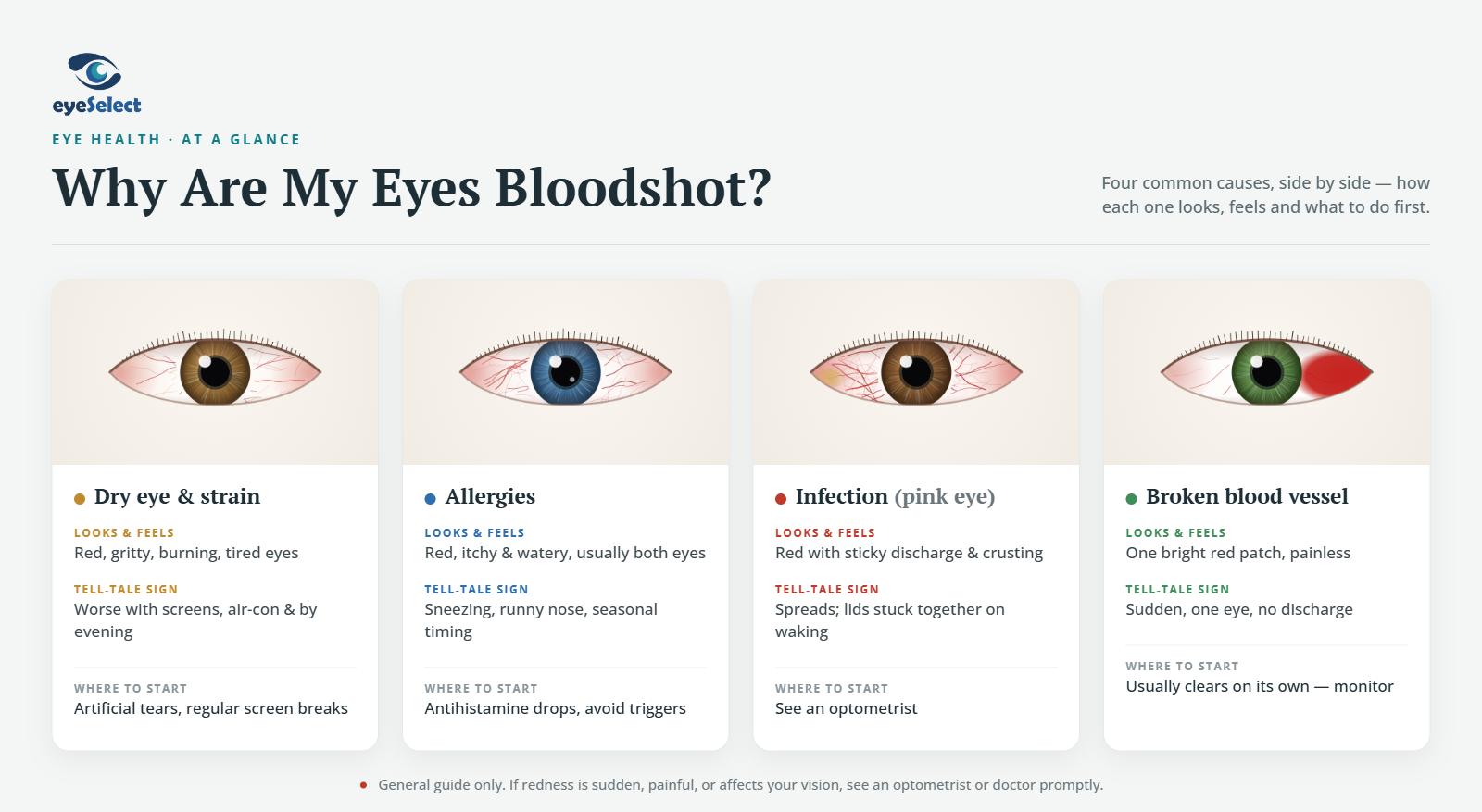
Bloodshot Eyes at a Glance
| Cause | What it looks and feels like | Tell-tale sign | Where to start |
|---|---|---|---|
| Dry eye or eye strain | Red, gritty, burning, tired eyes | Worse with screens, air-con and by evening | Artificial tears, screen breaks |
| Allergies | Red, itchy and watery, usually both eyes | Sneezing, runny nose, seasonal | Antihistamine drops, avoid triggers |
| Infection (pink eye) | Red with sticky discharge and crusting | Spreads, lids stuck together on waking | See an optometrist |
| Broken blood vessel | One bright red patch, painless | Sudden, one eye, no discharge | Usually clears on its own, monitor it |
How to Get Rid of Bloodshot Eyes
Because redness is a symptom, the real fix is treating whatever is behind it. For mild, everyday redness, a few steps usually help.
1. Use artificial tears.
Lubricating eye drops wash out irritants and ease redness. The American Academy of Ophthalmology suggests using them up to four times a day and choosing preservative-free drops if you need them more often.
2. Try a cool compress.
A clean, cool washcloth held over closed eyes a couple of times a day helps calm inflamed vessels.
3. Rest your eyes and use the 20-20-20 rule.
Every 20 minutes of screen time, look at something about 6 metres away for 20 seconds. Blink more often and aim for a solid night’s sleep.
4. Manage allergies.
Antihistamine eye drops and avoiding your triggers, such as smoke, pollen, dust and pet dander, take the heat out of allergy-related redness.
5. Give your contacts a break.
Take your lenses out, clean them properly and consider daily disposables if your eyes keep getting irritated.
6. Skip the “get the red out” drops.
Whitening or redness-relief drops can cause rebound redness, where the redness comes back worse once you stop, so they are best avoided for ongoing use.
When Should You See an Optometrist?
Most bloodshot eyes clear up without any fuss, but some signs mean it is time to get assessed. Book an eye exam if you notice:
- Eye pain, tenderness or a deep, throbbing ache
- Blurred vision or any change in your eyesight
- Sensitivity to light
- Yellow, green or brown discharge, or a sticky, crusty eye
- Redness after an injury or after something has hit your eye
- Redness that has not improved after about a week of home care
- Bloodshot eyes that keep returning, or whites that look yellow as well as red
These patterns can point to a more serious problem such as a corneal ulcer, uveitis or acute glaucoma, all of which need prompt treatment. Yellowing of the whites is a little different, as it often signals a liver issue rather than an eye problem, and it is worth seeing your GP about too.
Get Fast Relief for Red and Bloodshot Eyes at EyeSelect
Bloodshot eyes are almost always a short-lived response to tiredness, dryness, allergies or irritation, and most settle within a few days once you deal with the cause. The trap is ignoring the warning signs that set the harmless cases apart from the ones that need attention.
If your eyes are painful, your vision has changed, there is discharge or the redness followed an injury, do not wait it out.
At EyeSelect, our optometrists can examine the surface of your eye, check for infection or dryness and find what is really behind the redness, then recommend treatment that targets it.
We bulk bill eligible Medicare cardholders at both our Browns Plains and Forest Lake clinics. For more on related conditions, browse our guide to common eye problems and our other blog posts.
This article is for educational purposes and is not a substitute for professional optometric advice. Book an appointment for a personalised assessment.
Book an eye test at Browns Plains or Forest Lake, or call us on 07 3800 8700 (Browns Plains) or 07 3278 7341 (Forest Lake).
Frequently Asked Questions
Why are my eyes bloodshot?
Your eyes look bloodshot when the tiny blood vessels on the surface widen, usually because of tiredness, dryness, allergies or irritation. It is normally harmless. See an optometrist if the redness comes with pain, discharge or any change in your vision.
How do I get rid of bloodshot eyes fast?
Artificial tears, a cool compress over closed eyes and resting your eyes are the quickest ways to ease mild redness. Avoid your triggers and skip whitening drops, which can make redness worse over time. If your eyes are not better in about a week, see an optometrist.
What do bloodshot eyes mean?
Most of the time bloodshot eyes simply mean the surface is irritated or tired, not that anything is seriously wrong. Redness that is painful, persistent or comes with discharge or blurred vision can point to an infection or a more serious eye condition.
Why is only one eye bloodshot?
A single red eye, especially one bright red patch, is often a broken blood vessel. It usually looks worse than it feels, is painless and clears on its own within about two weeks. Get it checked if it is painful, follows an injury or comes with vision changes.
Why do I wake up with bloodshot eyes?
Waking up with red eyes is commonly down to overnight dryness, blepharitis or sleeping in your contact lenses. Lubricating drops and good eyelid hygiene usually help. If it keeps happening, an optometrist can find the cause.
Are bloodshot eyes a sign of something serious?
Usually not. Most red eyes come from minor irritation, dryness or allergies. Bloodshot eyes that come with pain, light sensitivity, vision changes, discharge or follow an injury do need prompt assessment, as they can signal a more serious problem.