

Most people never think about their central vision until it starts to slip. The tricky part is that it can slip so slowly you barely notice. Your brain quietly fills in the gaps, one eye covers for the other and the change hides in plain sight. That is exactly the problem an Amsler grid is built to solve. It’s a small square of lines you check at home, and it can flag changes in your vision long before they become obvious.
If you’ve been told you’re at risk of macular disease, an Amsler grid is one of the simplest tools you can use between appointments. Below is what the grid is, how to use it properly, what abnormal results look like and where to download a printable version. If you would rather have your eyes checked in person, you can book a comprehensive eye exam at Browns Plains or Forest Lake. Medicare bulk-billed appointments are available.
What is an Amsler grid?
An Amsler grid is a square pattern of evenly spaced horizontal and vertical lines with a single dot in the centre. The standard chart is black lines on a white background, though white-on-black and other variations exist. You look at the central dot with one eye at a time and watch how the surrounding lines appear.
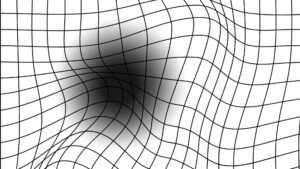
The grid was developed in the 1940s by Marc Amsler, a Swiss ophthalmologist. It has been used as a vision-monitoring tool ever since. Its job isn’t to give you a prescription or replace an eye test. The Amsler grid is a quick daily check that makes subtle changes in your central vision easier to spot.
What does the Amsler grid test for?
The Amsler grid test checks the health of your central vision, which is controlled by the macula. The macula is the small, sensitive part of the retina at the back of your eye that handles fine detail. You rely on it to read, recognise faces, thread a needle and see clearly straight ahead.
When the macula is working normally, the grid lines look straight, evenly spaced and unbroken. When something is affecting the macula, those lines can appear distorted or patchy. Because the test isolates one eye at a time, it can reveal a problem in one eye that the other eye has been compensating for.
Conditions an Amsler grid can help monitor
The grid is most strongly associated with age-related macular degeneration, but it can help flag changes from several macular conditions, including:
- Dry and wet age-related macular degeneration (AMD)
- Diabetic macular oedema
- Epiretinal membrane, sometimes called macular pucker
- Central serous retinopathy
- Other retinal changes that distort the macula
It’s also sometimes used to screen central vision before cataract surgery. Whatever the reason, the principle is the same: the grid makes distortion easier to notice early.
How to use an Amsler grid at home
The Amsler grid test takes less than a minute per eye. For it to be useful, do it the same way each time, ideally once a day.
- Wear the glasses or contact lenses you normally use for reading.
- Hold the grid about 30 to 38 centimetres from your face, roughly normal reading distance.
- Make sure the lighting is good and there is no glare on the page.
- Cover one eye gently, without pressing on it.
- Look straight at the centre dot with your uncovered eye and keep your focus there for around 10 seconds.
- While staring at the dot, use your side vision to check whether all the lines look straight, even and complete.
- Repeat with the other eye.
The key is to keep your eye fixed on the central dot the whole time. You aren’t scanning the grid line by line. You’re noticing what happens in the rest of your field of vision while you stay locked on the centre.
A helpful habit is to test at the same time and in the same spot each day. Consistency is what lets you catch a small change from one day to the next.
How to record your Amsler grid results
A simple way to track changes is to lightly pencil in any distorted or missing areas on a printed grid, then date it. If your next test looks different, you have a clear before-and-after to show your optometrist. A photo on your phone works just as well.
What an abnormal Amsler grid looks like
If your vision is healthy, every line will look straight and every square will look the same size. Abnormal results usually show up in one of two ways.
Wavy or bent lines. When straight lines appear to curve, bend or ripple, that’s called metamorphopsia. It’s a classic early sign of fluid or distortion at the macula and is often one of the first clues that dry AMD may be turning into wet AMD.
Dark, blank or blurry patches. A missing or grey area on the grid is called a scotoma. It means part of your central vision is not registering the lines at all.
You might also notice that some squares look smaller, larger or fainter than others, or that a section seems to be missing. Any of these is worth acting on, especially if it is new or different from your last check.
Who should use an Amsler grid?
The grid is most useful for people with, or at higher risk of, macular disease. This matters a great deal in Australia. According to Macular Disease Foundation Australia, one in seven Australians over 50 shows some evidence of AMD, which works out to around 1.29 million people, and AMD is responsible for roughly half of all blindness and severe vision loss in the country.
Your optometrist may recommend daily Amsler grid checks if you:
- Have been diagnosed with dry AMD and want to catch any progression early
- Have a strong family history of macular degeneration
- Have diabetes affecting your eyes
- Are being monitored for another macular condition
Risk also rises with age, smoking and family history. The Australian National Eye Health Survey found that late AMD climbed to nearly 7 per cent in people aged 80 and over. If any of this sounds like you, it’s worth raising the Amsler grid with your optometrist at your next visit.
Where to get a printable Amsler grid
You don’t need to buy anything. A free printable PDF works perfectly well, provided you print it at full size on plain A4 paper. You can download our free printable Amsler grid here. Your optometrist can also give you one and walk you through how to use it correctly at your next appointment.
A few tips when printing your own:
- Print at 100 per cent scale, not “fit to page”
- Use plain white paper for the best contrast
- Stick it to the fridge or a clear wall at eye level so you remember to check daily
What the Amsler grid can and cannot do
This is where a lot of advice falls short. The Amsler grid is genuinely useful, but it has limits. Knowing them keeps you safe.
The amsler grid is a monitoring tool, not a diagnosis. A normal grid does not prove your eyes are healthy, because its sensitivity is not perfect and it only tests a small portion of your central vision. Some macular changes will not show up on the grid at all.
In short, the grid is a smoke alarm. It’s brilliant at alerting you to a possible problem so you can act quickly, but it does not tell you what is burning or how serious it is. That is the job of a comprehensive eye exam, which uses retinal imaging and scanning to look at the macula in detail. Daily home checks work best alongside regular professional exams, not instead of them.
When to book an eye exam
Use the grid to know when to act. Book an appointment promptly if you notice any of the following on either eye:
- Lines that look wavy, bent or distorted
- A dark, grey or blank patch anywhere on the grid
- Blurred or missing sections that were not there before
- Any new change compared with your usual result
If the change is sudden or dramatic, treat it as urgent and contact us straight away. With wet AMD in particular, early treatment makes a real difference. The window to protect your vision can be short.
For ongoing monitoring or specialist lens advice, our optometry services cover everything from retinal photography to specialist glasses. You can reach Browns Plains on 07 3800 8700 or Forest Lake on 07 3278 7341.
Amsler grid FAQs
What does the Amsler grid test for?
The Amsler grid tests the central part of your vision, controlled by the macula. It helps detect early signs of macular conditions such as age-related macular degeneration, diabetic macular oedema and epiretinal membrane.
How long do you look at the Amsler grid?
About 10 seconds per eye is enough. Cover one eye, focus on the central dot and use your peripheral vision to check the lines. Then switch eyes.
How often should I use an Amsler grid?
Once a day for most people monitoring a macular condition or as directed by your optometrist. Testing at the same time each day makes changes easier to spot.
What does an abnormal Amsler grid look like?
The lines may appear wavy, bent or broken, or part of the grid may look dark, grey, blurry or missing. Some squares may also look smaller or larger than others.
Can I use an Amsler grid if I wear glasses?
Yes. Wear the glasses or contact lenses you normally use for reading. Hold the grid at your usual reading distance of 30 to 38 centimetres.
Where can I get an Amsler grid?
Your optometrist can provide one at your next appointment. Free printable PDF versions are also available from Macular Disease Foundation Australia and other reputable eye health organisations.
Does a normal Amsler grid mean my eyes are healthy?
Not necessarily. The grid only checks part of your central vision and can miss some changes. It supports regular eye exams rather than replacing them.
Is the Amsler grid only for macular degeneration?
No. It is most associated with AMD but can help monitor other macular conditions, including diabetic macular oedema, epiretinal membrane and central serous retinopathy.
Book Your Macular Degeneration Eye Exam with EyeSelect
An Amsler grid is one of the easiest, cheapest ways to keep an eye on your central vision at home. It will not diagnose anything on its own, but it can give you an early warning that something has changed, which is often the difference between catching a problem and missing it. Pair it with regular check-ups and you have a solid plan.
If you are due for a check, or you have noticed anything on the grid that does not look right, book a comprehensive eye exam at Browns Plains or Forest Lake today.
This article is for educational purposes and is not a substitute for professional optometric advice. Book an appointment for a personalised assessment.