
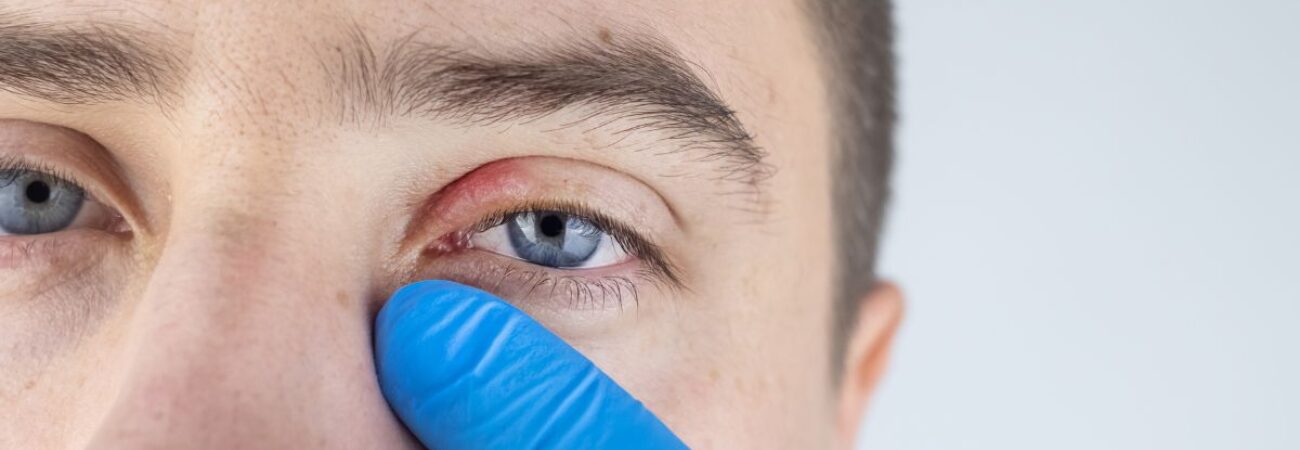
Blepharitis is one of the more common reasons people end up in the optometry chair with red, crusty eyelids, and most have never heard the word before we say it out loud. It’s not dangerous. But it is persistent: calm a flare-up down and there’s a good chance another one shows up a few months later.
Here’s what’s actually happening on the eyelid margin, why it keeps returning and what actually brings it under control.
What Is Blepharitis?
Blepharitis is chronic inflammation of the eyelid margin, the thin strip of skin where your eyelashes grow. It usually affects both eyes and can show up at any age, though it becomes more common as you get older.
It isn’t a single disease with one cause. Think of it more as an umbrella term for eyelid inflammation that can stem from bacteria, blocked oil glands, mites, or an underlying skin condition. That’s part of why it’s so persistent. You can calm one flare-up only to have another one start a few months later, because the underlying trigger is still there.
The good news is that blepharitis almost never threatens your eyesight. The bad news is that it rarely disappears for good. Managing it is about routine, not a one-off fix.
Anterior vs Posterior Blepharitis: What’s the Difference?
Optometrists split blepharitis into two types, depending on which part of the eyelid is doing the misbehaving. Plenty of people have a mix of both.
Anterior Blepharitis
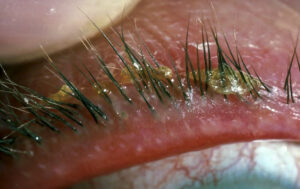
This affects the front of the eyelid, right where your eyelashes attach. It’s usually driven by an overgrowth of bacteria that live on everyone’s skin (commonly Staphylococcus) or by tiny mites called Demodex that make their home in the lash follicles. The telltale sign is flaky, dandruff-like debris clinging to the base of the lashes.
Posterior Blepharitis
This type affects the inner rim of the eyelid, where the meibomian glands sit. These glands produce the oily layer of your tears, and when they become blocked or inflamed, a condition called meibomian gland dysfunction, the oil can’t reach the surface of your eye properly. This is the type most closely tied to dry eye, because a tear film without enough oil evaporates too fast.
Blepharitis Symptoms to Watch For
Symptoms tend to build gradually rather than appear overnight, and they’re usually worse first thing in the morning. Common signs include:
- A gritty or burning feeling, like there’s something in your eye
- Red, swollen eyelid margins
- Flaky or crusty debris at the base of your eyelashes
- Eyelids that feel sticky or are hard to open after sleep
- Eyes that swing between watery and dry through the day
- Sensitivity to light
- Eyelashes that fall out, grow in the wrong direction, or feel brittle
If the discharge is heavier than typical crusting, or you’re seeing pus-like buildup in the corner of your eye, it’s worth reading our guide to gunky eyes to rule out a co-existing infection.
What Causes Blepharitis?
There’s rarely one single cause. Most cases come from a combination of the following:
- Bacterial overgrowth at the base of the eyelashes, which irritates the skin and clogs the follicles
- Seborrhoeic dermatitis, the same skin condition behind dandruff, which can flare on the eyelids as easily as the scalp
- Demodex mites, microscopic organisms that live on everyone’s skin in small numbers but can overpopulate the lash line
- Meibomian gland dysfunction, where thickened oil blocks the glands along the inner eyelid
- Rosacea, a skin condition that commonly involves the eyelids alongside facial redness
- Contact lens wear and eye makeup left on overnight, both of which add friction and bacteria to an already sensitive area
If you wear contacts and keep getting flare-ups, it’s worth having your fit checked. A lens that isn’t sitting quite right can make eyelid irritation harder to shake. Our contact lens fitting guide covers what a proper fit involves.
Is Blepharitis Contagious?
No. Blepharitis isn’t contagious the way conjunctivitis is. The bacteria and mites involved already live on everyone’s skin in small, harmless numbers, so you can’t “catch” blepharitis from someone else in the usual sense. That said, sharing towels, pillowcases or eye makeup during a flare-up can spread bacteria between your own eyes or irritate someone else’s skin, so it’s still worth keeping those items to yourself while symptoms are active.
Will Blepharitis Go Away on Its Own?
Mild cases can settle down with consistent eyelid hygiene, but blepharitis has a strong tendency to come back. It’s a chronic condition, which means the goal is control rather than cure.
Left untreated, it doesn’t stay harmless forever. Ongoing inflammation can lead to:
- Chronic dry eye, as blocked oil glands destabilise your tear film
- Recurring styes or chalazia
- Eyelash loss or lashes that grow inward and rub against the eye
- Corneal irritation in more advanced cases, which can affect comfort and, occasionally, vision
None of this is a reason to panic. It’s a reason to treat blepharitis as an ongoing routine rather than something you fix once and forget about.
Chalazion vs Stye: How They Differ From Blepharitis
Blepharitis, styes and chalazia often get mentioned in the same breath because they can all show up as redness or a lump on the eyelid, and one can lead to another.
A stye is a painful, red bump caused by an acute bacterial infection, usually at the base of an eyelash. A chalazion is a firmer, usually painless lump that forms when an oil gland stays blocked after the initial inflammation settles. Blepharitis is different again. It’s ongoing inflammation along the whole eyelid margin rather than a single localised lump, and it’s often the underlying reason someone keeps getting styes or chalazia in the first place.
If you’re not sure which one you’re dealing with, that’s exactly the kind of thing worth a quick check with your optometrist rather than guessing at home.
How to Treat Blepharitis
Because blepharitis is chronic, treatment is less about a single remedy and more about a routine you keep up, with medical support added in when needed.
Your Daily Eyelid Hygiene Routine
This is the foundation of managing blepharitis, and most people need to keep it up long term rather than just during a flare-up.
- Warm compress. Hold a clean, warm (not hot) cloth or eye mask over closed eyelids for five to ten minutes. This softens the oil sitting in blocked glands.
- Gentle lid massage. While the lids are still warm, use a clean fingertip to massage along the lash line in small circles, helping loosened oil work its way out.
- Lid cleanse. Use a purpose-made lid scrub, foam or wipe to clean away debris at the base of the lashes. Diluted baby shampoo used to be the go-to, but a dedicated lid hygiene product is gentler and more effective.
We stock lid hygiene products at both our Browns Plains and Forest Lake clinics, and can talk you through which one suits your particular type of blepharitis.
When You Need Medical Treatment
If hygiene alone isn’t cutting it, your optometrist may recommend:
- Antibiotic ointment or drops applied directly to the eyelid margin to bring bacterial overgrowth under control
- Oral antibiotics, sometimes prescribed for posterior blepharitis or rosacea-related cases, which your optometrist or GP will guide you through
- In-clinic treatment to physically clear blocked meibomian glands, for people whose posterior blepharitis isn’t responding to home care
None of these replace your daily routine. They work alongside it.
Managing Chronic Blepharitis Long Term
Because flare-ups tend to return, it helps to think of blepharitis the way you’d think of any chronic skin condition. Keep the daily routine going even when your eyes feel fine, and book a review if symptoms creep back so we can check whether your treatment needs adjusting. Regular check-ins catch changes early, before they turn into a bigger flare-up.
Blepharitis and Dry Eye: Why They Often Go Together
Posterior blepharitis and dry eye are close cousins. When the meibomian glands can’t release enough oil, the watery layer of your tears evaporates faster than it should, leaving your eyes feeling dry, gritty and tired by the end of the day, even if they were watering that same morning.
If dry eye is part of your picture, the right eye drop makes a real difference. Not all drops are built the same way, and using the wrong type can leave you no better off. Our guide to types of eye drops breaks down which formulations actually help with an unstable tear film.
When to See an Optometrist for Blepharitis
Home care handles most mild cases, but it’s time to come in if:
- Symptoms haven’t improved after a couple of weeks of consistent lid hygiene
- One eye is noticeably worse than the other
- You’re getting recurring styes or chalazia
- Your vision feels blurry or fluctuates
- The eyelid is significantly swollen or painful, not just irritated
An optometrist can confirm whether you’re dealing with anterior or posterior blepharitis, rule out anything more serious and build a treatment plan around what’s actually driving your symptoms rather than guessing from the pharmacy shelf. Book an appointment at Browns Plains or Forest Lake and we’ll take it from there.
Frequently Asked Questions About Blepharitis
What’s the best way to get rid of blepharitis?
There’s no instant cure, but daily eyelid hygiene controls most cases: warm compresses, gentle lid massage and a proper lid cleanse. If bacteria or meibomian gland dysfunction are driving it, your optometrist may add antibiotic treatment or in-clinic gland clearing on top of the daily routine.
What is the root cause of blepharitis?
There isn’t one single root cause. It’s typically a combination of bacterial overgrowth, blocked meibomian glands, Demodex mites, or an underlying skin condition such as seborrhoeic dermatitis or rosacea.
Will blepharitis go away by itself?
Mild cases can settle with consistent lid hygiene, but blepharitis is chronic and tends to return without ongoing care. Most people manage it long term rather than curing it once.
What happens if blepharitis goes untreated?
Untreated blepharitis can lead to chronic dry eye, recurring styes or chalazia, eyelash loss or misdirected lash growth and, in more advanced cases, irritation of the cornea.
Is blepharitis contagious?
No. It’s caused by bacteria and mites that already live on your skin, not by something you catch from someone else. Good hygiene still helps prevent flare-ups from spreading between your own eyes.
Can blepharitis affect my vision?
It rarely causes permanent vision loss. Posterior blepharitis can destabilise your tear film enough to blur vision temporarily, and advanced, untreated cases can irritate the cornea, which is another reason to get recurring symptoms checked early.
This article is for educational purposes and is not a substitute for professional optometric advice. Book an appointment for a personalised assessment.