



Binocular Vision Dysfunction: When Your Eyes Don’t Work Together
By the time most people hear the words binocular vision dysfunction, they’ve been round the loop a few times. A GP visit. Possibly a scan. A migraine script that took the edge off without ever stopping it. Two or three eye tests that came back perfectly normal, which somehow felt like the least reassuring result of the lot. If that’s you, here’s the first thing worth saying. You’re not imagining
Chalazion: Causes, Treatment and How It Differs From a Stye
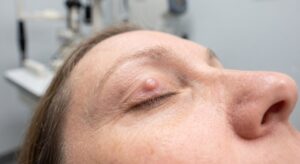
The lump turned up about three weeks ago. You assumed it was a stye, held a warm washer over it morning and night and waited for it to come to a head. It never did. It also never really hurt. It just sat there, firm and quietly stubborn, a little higher up the lid than a stye usually sits. That lump is most likely a chalazion, and the reason your

Eye Floaters: What They Are, What Causes Them and When to See an Optometrist
Eye floaters are extremely common. Most people develop them at some point, especially as they get older. But they barely notice them until a little speck or squiggle drifts across a blank wall or a bright sky, then disappears the moment they try to look straight at it. For most of us, that’s the entire story: a normal, slightly odd part of having eyes that’s more curious than concerning. But
Blepharitis: Symptoms, Causes and How to Treat Inflamed Eyelids
Blepharitis is one of the more common reasons people end up in the optometry chair with red, crusty eyelids, and most have never heard the word before we say it out loud. It’s not dangerous. But it is persistent: calm a flare-up down and there’s a good chance another one shows up a few months later. Here’s what’s actually happening on the eyelid margin, why it keeps returning and what

Pain Behind the Eye: Common Causes and When to Worry
It usually starts as a dull ache behind one eye by mid-afternoon. Maybe it flares into a sharp stab when you look up from your desk or settles into a throbbing that tracks with your pulse. Pain behind the eye is one of the most common complaints we hear about, and it sends a lot of people straight to the internet at 11pm wondering if something is seriously wrong. Here’s

Keratoconus Symptoms: The Warning Signs Most People Miss
You get new glasses. Six months later, they’re not quite right anymore. Another test, another prescription and still that faint smearing around headlights at night that never fully goes away. If that pattern sounds familiar, it’s worth knowing about keratoconus, a corneal condition that often hides behind years of “just another prescription change”. Keratoconus affects far more Australians than most people realise. A landmark population study of 20-year-olds in Western